A single spilled cup of coffee or a tipped wine glass can turn a spotless carpet into a source of daily frustration. The good news is that most household carpet stains, whether they’re caused by coffee, red wine, cooking grease, or everyday dirt, can be removed with items you likely already have in your kitchen cabinet. This guide walks you through proven, step-by-step methods for tackling the most stubborn carpet stains, along with the mistakes to avoid and tips to keep your carpet looking fresh for years to come.
Why You Should Act Fast on Carpet Stains?
Every stain behaves differently, but one rule applies across the board: speed matters. Fresh spills sit on the surface of the carpet fibers, which makes them far easier to lift than stains that have had time to dry and set in. This is especially important for carpets in Dubai, where regular cleaning and prompt stain removal can help maintain their appearance in a busy, high-traffic environment. Coffee and wine are especially tricky because they contain tannins, natural coloring compounds that bond quickly with fibers and darken over time. Grease and oil-based stains behave differently since they’re hydrophobic, meaning they repel water and cling stubbornly to carpet fibers instead of rinsing away.
The longer a stain sits, the deeper it penetrates, making it harder to fully remove even with professional-grade products. Treating a spill within the first few minutes dramatically increases your chances of getting the carpet back to its original condition.
General Carpet Stain Removal Steps
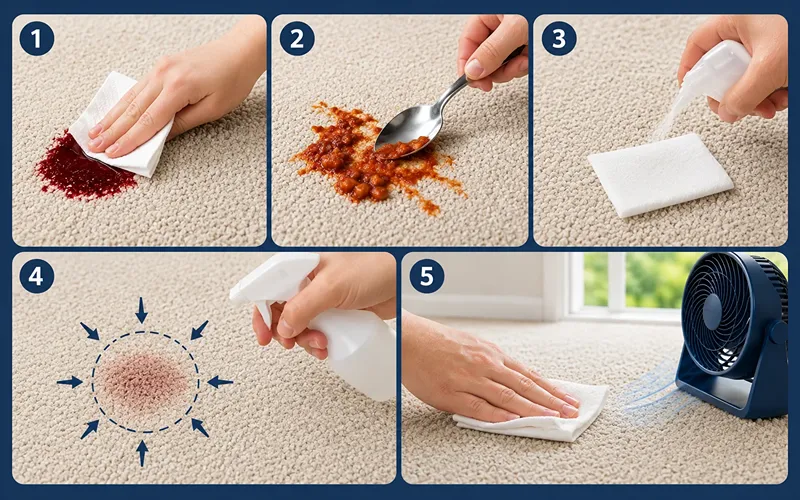
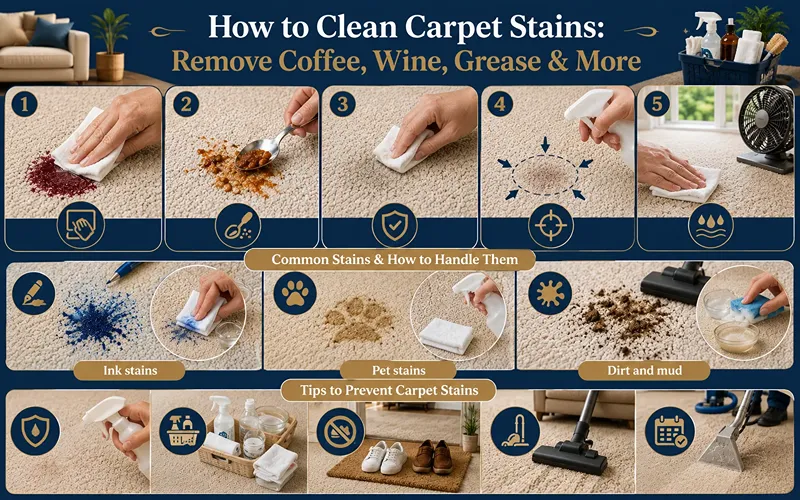
Before jumping into stain-specific methods, it helps to understand the basic process that works for almost any spill:
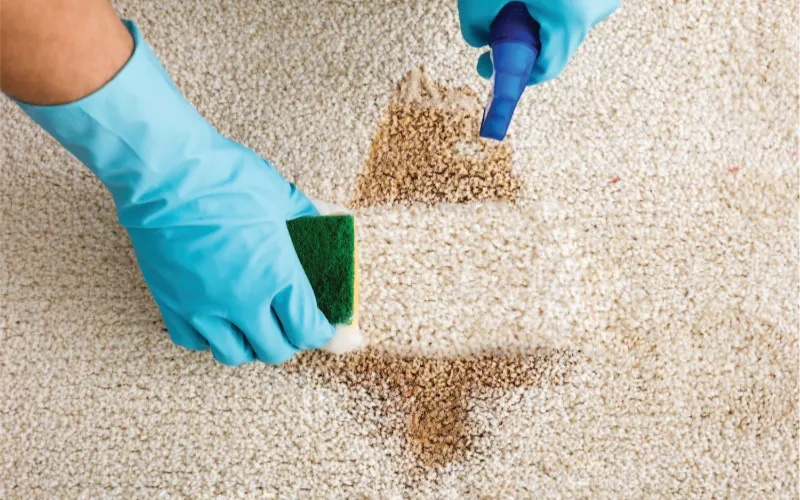
- Blot, don’t rub. Press a clean white cloth or paper towel firmly onto the stain to soak up as much liquid as possible. Rubbing pushes the stain deeper into the fibers and spreads it across a wider area.
- Remove solids first. For thicker spills like food or grease, scrape away any solid residue using a spoon or a rounded tool before applying liquid cleaners.
- Test your cleaning solution. Dab a small amount on a hidden section of wall to wall carpet and wait a few minutes to confirm it won’t cause discoloration.
- Work from the outside in. Apply your chosen solution starting at the edges of the stain and moving toward the center. This technique keeps the stain contained instead of letting it spread outward.
- Rinse and dry thoroughly. Excess cleaning solution left in the carpet can attract dirt and cause the stain to reappear, so always finish by blotting with plain water and drying the area completely, ideally with a fan or open window for ventilation.
With these fundamentals in mind, here’s how to handle the most common carpet stains.
How to Remove Coffee Stains from Carpet?
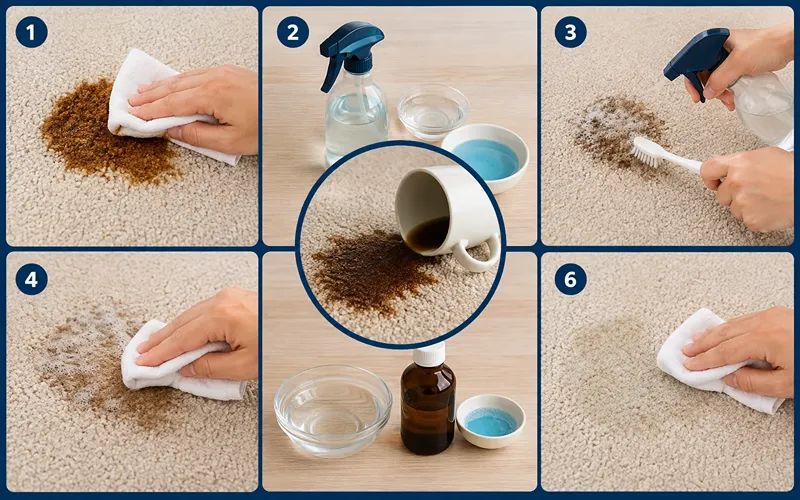
Coffee is one of the toughest stains to deal with because it combines rich pigments with natural oils. If you take your coffee with milk or cream, added proteins bind with the tannins as well, which makes the stain even more persistent.
Step-by-step method:
- Blot up as much coffee as possible with a clean cloth immediately after the spill.
- Mix one part white vinegar with two parts warm water in a spray bottle, or combine a small amount of dish soap with warm water instead.
- Spray or apply the solution to the stain and gently work it into the fibers, moving from the edges toward the center.
- Blot with a clean section of cloth, repeating until the stain lifts.
- For older or more stubborn coffee stains, mix one cup of hydrogen peroxide with half a teaspoon of dish soap. This combination uses the mild bleaching power of hydrogen peroxide along with the grease-cutting action of dish soap, but always spot-test it first since it can lighten darker carpets.
- Rinse the area with cool water and blot dry.
How to Remove Red Wine Stains from Carpet
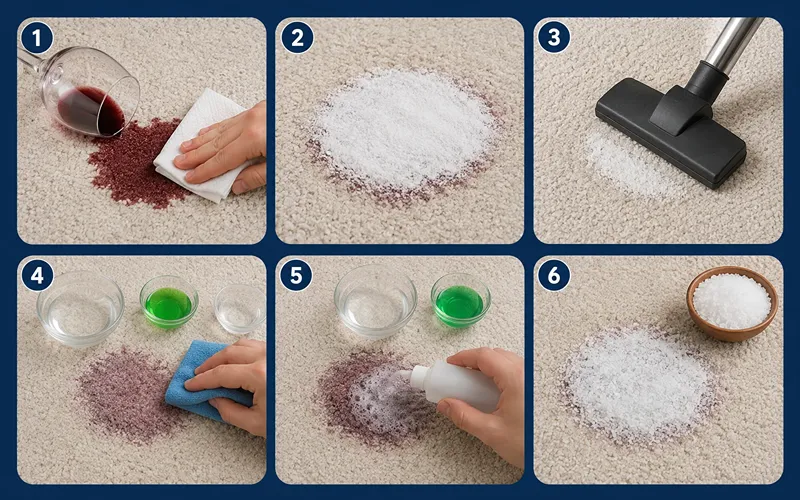
Red wine stains spread fast and set even faster thanks to the tannins responsible for their deep color. Acting within the first minute or two makes a significant difference.
Step-by-step method:
- Blot the spill immediately, applying firm pressure without rubbing.
- Cover the damp area with baking soda and let it sit for several minutes so it can start absorbing the liquid.
- Once the baking soda dries, vacuum it up along with the lifted stain particles.
- For any remaining color, mix a tablespoon of dish soap with a tablespoon of white vinegar and two cups of water, then apply it with a cloth and blot until the stain fades.
- Alternatively, combine two parts hydrogen peroxide with one part dish soap, apply it to the stain, and let it sit for up to twenty minutes before blotting again.
- If the stain has already dried, dampen it slightly and cover it generously with salt, which draws out the remaining pigment without the need for scrubbing.
How to Remove Grease and Oil Stains from Carpet
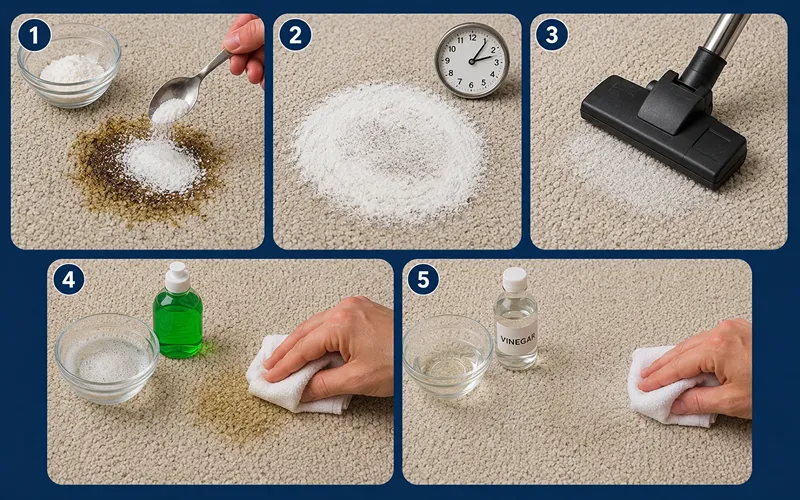
Grease behaves very differently from liquid stains like coffee or wine because it repels water rather than dissolving in it. This is why an absorbent-first approach works best, rather than reaching for a liquid cleaner right away.
Step-by-step method:
- Sprinkle a generous layer of baking soda or cornstarch directly over the grease stain, making sure it’s fully covered.
- Let the powder sit for at least fifteen to twenty minutes, or overnight for larger or older stains, so it has time to draw the oil out of the fibers.
- Vacuum the powder thoroughly, using slow, overlapping passes to pick up every trace.
- If any grease remains visible, mix a small amount of dish soap with warm water and blot the area with a clean cloth, since the soap’s surfactants break down the oil that water alone can’t touch.
- For any leftover residue, a solution of equal parts white vinegar and water can help finish the job while also deodorizing the carpet.
Other Common Carpet Stains and How to Handle Them
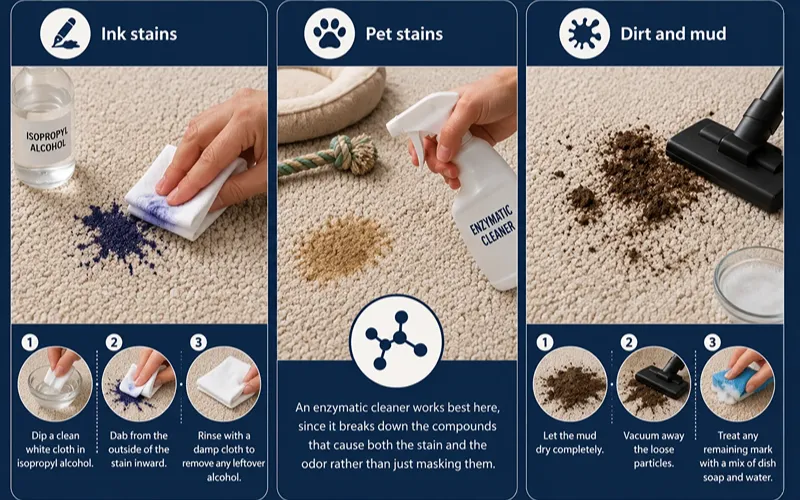
- Ink stains: Dip a clean white cloth in isopropyl alcohol and dab from the outside of the stain inward, then rinse with a damp cloth to remove any leftover alcohol.
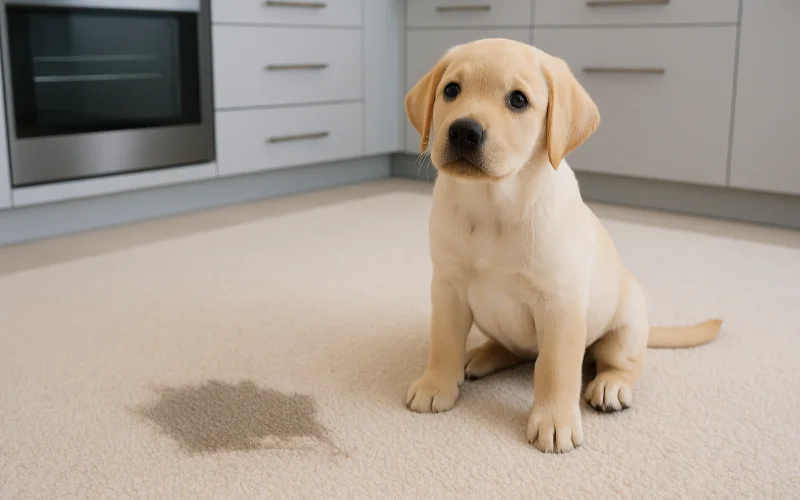
- Pet stains: An enzymatic cleaner works best here, since it breaks down the compounds that cause both the stain and the odor rather than just masking them.
- Dirt and mud: Let the mud dry completely, vacuum away the loose particles, then treat any remaining mark with a mix of dish soap and water.
Common Mistakes to Avoid When Cleaning Carpet Stains
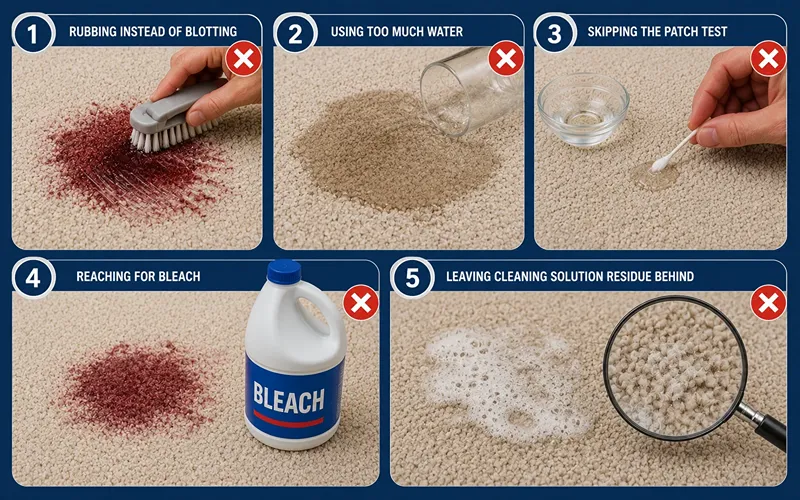
Even with the right products, a few common missteps can make stains harder to remove:
- Rubbing instead of blotting, which drives the stain deeper and widens the affected area.
- Using too much water, which can leave the carpet damp for too long and create the perfect conditions for mold or a reappearing stain.
- Skipping the patch test, especially with hydrogen peroxide or vinegar-based solutions, which can lighten or discolor certain carpet fibers.
- Reaching for bleach, which almost always causes more damage than it fixes.
- Leaving cleaning solution residue behind, since any soap left in the fibers attracts dirt and grime over time.
Tips to Prevent Carpet Stains in the Future
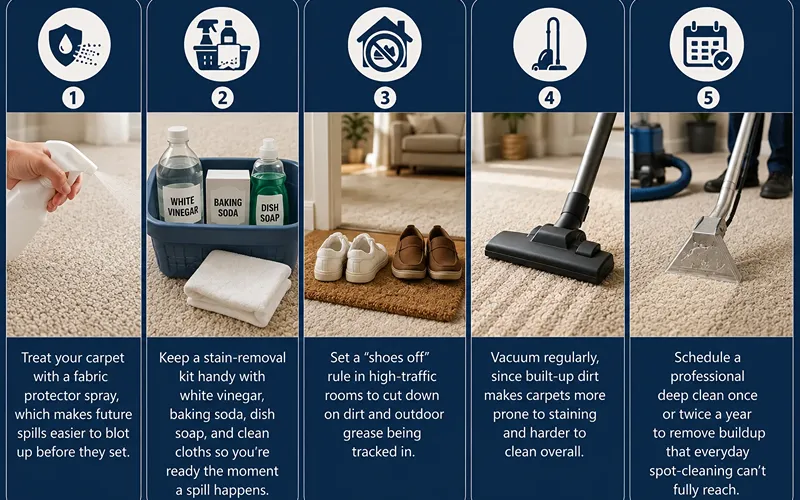
- Treat your carpet with a fabric protector spray, which makes future spills easier to blot up before they set.
- Keep a stain-removal kit handy with white vinegar, baking soda, dish soap, and clean cloths so you’re ready the moment a spill happens.
- Set a “shoes off” rule in high-traffic rooms to cut down on dirt and outdoor grease being tracked in.
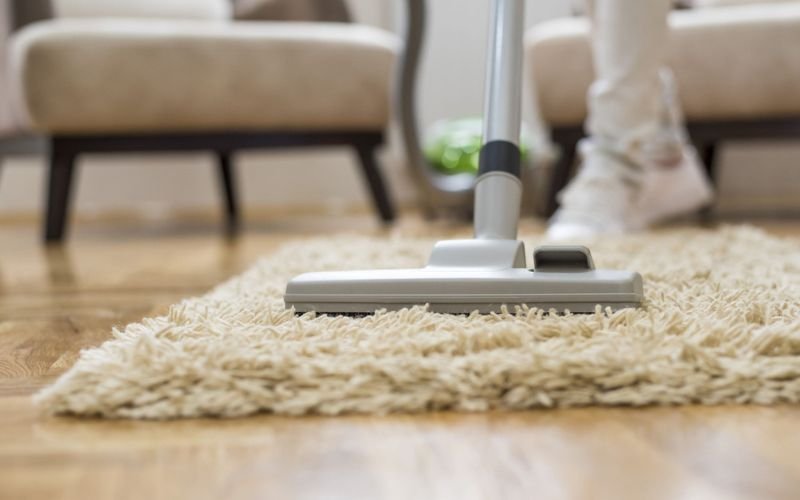
- Vacuum regularly, since built-up dirt makes carpets more prone to staining and harder to clean overall.
- Schedule a professional deep clean once or twice a year to remove buildup that everyday spot-cleaning can’t fully reach.
When to Call a Professional Carpet Cleaner
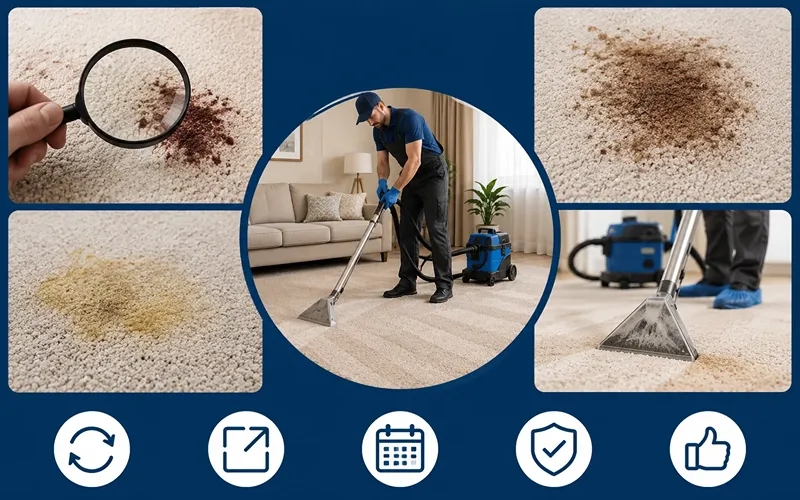
Most stains respond well to the DIY methods above, but some situations call for expert help. If a stain keeps reappearing after cleaning, if it’s spread across a large area, or if it’s an old, deeply set stain that hasn’t responded to repeated treatment, a professional carpet cleaning service has access to hot water extraction machines and industrial-strength solutions that go beyond what’s practical at home. Professional cleaning is also worth considering for delicate or expensive carpets where a DIY mistake could cause lasting damage.
Final Thoughts
Carpet stains are inevitable, but they don’t have to be permanent. Whether you’re dealing with a fresh coffee spill, a dramatic red wine mishap, or a stubborn grease mark from the kitchen, the combination of quick action, the right household ingredients, and proper blotting technique will handle the vast majority of stains at home. For anything that refuses to budge, a professional carpet cleaning service can step in and restore your carpet’s original look without risking further damage.
Frequently Asked Questions
Does hydrogen peroxide damage carpet?
Hydrogen peroxide is a mild bleaching agent, so while it works well on light-colored carpets, it can lighten darker fibers. Always test it on a hidden patch before applying it to a visible stain.
Can baking soda alone remove carpet stains?
Baking soda is excellent at absorbing moisture and grease, and it works well on fresh spills or as a first step before applying a liquid cleaning solution, but it’s usually most effective when paired with vinegar, dish soap, or hydrogen peroxide for tougher, set-in stains.
How long should I let a cleaning solution sit on a stain?
Most solutions work best when left for five to twenty minutes, giving them enough time to break down the stain without soaking the carpet so long that it stays damp.