Finding small, fuzzy larvae crawling across your carpet or discovering unexplained holes in your favorite wool sweater is unsettling, and it usually means one thing: carpet beetles have moved in. Unlike bed bugs, these pests won’t bite you, but left unchecked they can quietly destroy rugs, upholstery, clothing, and even stored food over time.
The good news is that carpet beetles are one of the more manageable household pests once you know what you’re dealing with. This guide walks you through how to identify them, why they show up in the first place, and exactly how to get rid of them from carpets in Dubai, using both natural and chemical methods, plus how to stop them from ever coming back.
What Are Carpet Beetles?
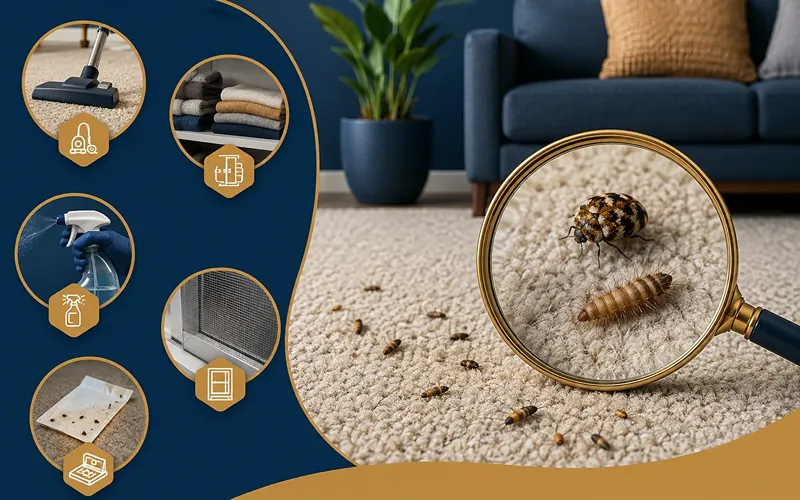
Carpet beetles are small, oval-shaped insects belonging to the dermestid beetle family. Adults are typically just 1/8 to 3/16 of an inch long and are covered in a mottled pattern of black, white, brown, and orange or yellow scales, which often makes them look speckled rather than solid-colored.
Outdoors, adult carpet beetles are harmless, they feed on pollen and nectar and often enter homes by accident through open windows, doors, torn screens, or gaps around utility lines. Once inside, females lay eggs in secluded spots like closets, air vents, baseboards, and under furniture. It’s the larvae, not the adults, that cause the real damage. They feed on natural, animal-based fibers such as wool, silk, fur, feathers, and leather, along with pet hair, lint, and even stored dry goods like flour, cereal, and pet food.
Carpet Beetles vs. Bed Bugs: How to Tell the Difference
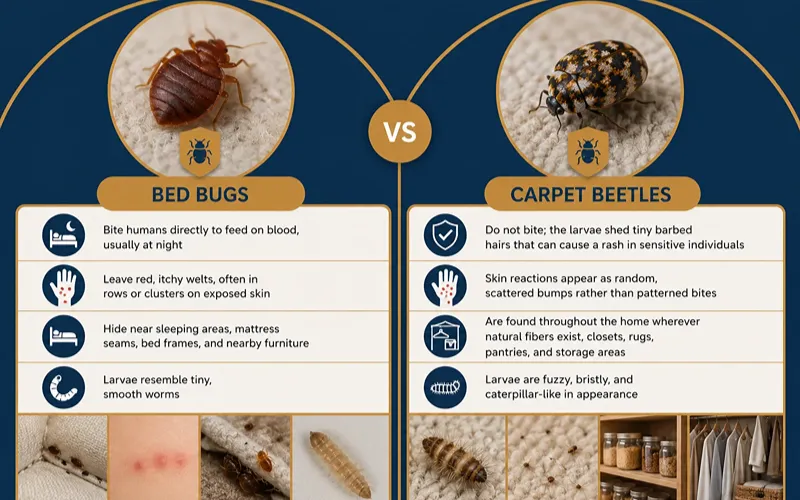
Because both pests are small and can trigger itchy skin reactions, they’re frequently mixed up, but the treatment approach for each is completely different, so correct identification matters.
Bed bugs:
- Bite humans directly to feed on blood, usually at night
- Leave red, itchy welts, often in rows or clusters on exposed skin
- Hide near sleeping areas, mattress seams, bed frames, and nearby furniture
- Larvae resemble tiny, smooth worms
Carpet beetles:
- Do not bite; the larvae shed tiny barbed hairs that can cause a rash in sensitive individuals
- Skin reactions appear as random, scattered bumps rather than patterned bites
- Are found throughout the home wherever natural fibers exist, closets, rugs, pantries, and storage areas
- Larvae are fuzzy, bristly, and caterpillar-like in appearance
If you’re seeing blood spots and bite marks near your bed, you’re likely dealing with bed bugs. If you’re noticing skin irritation with no bite pattern, alongside damaged fabric or shed larval skins, wall to wall carpet beetles are the more likely culprit.
Signs You Have a Carpet Beetle Infestation
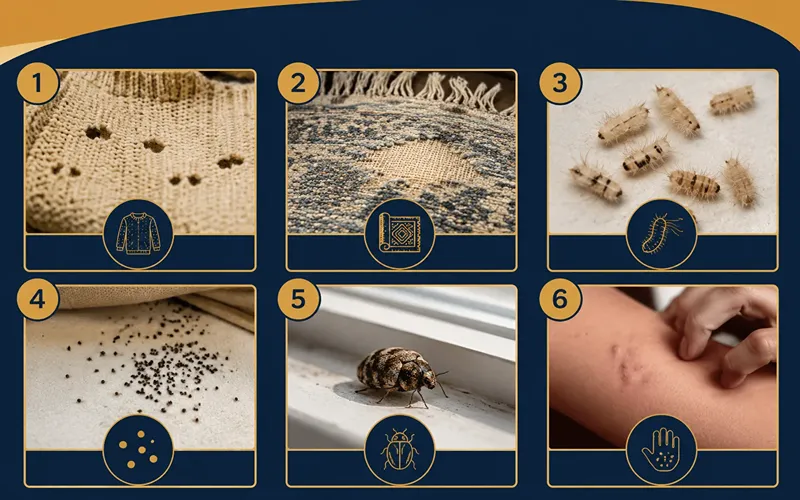
Carpet beetles are experts at staying hidden, so most homeowners notice the damage before they ever spot a live insect. Watch for:
- Small, irregular holes in wool clothing, blankets, rugs, or upholstered furniture
- Thinning or bald patches on natural-fiber sisal carpets and rugs
- Fuzzy, bristly shed skins tucked into closets, drawers, or along baseboards
- Fecal pellets that look like tiny grains of sand near infested items
- Adult beetles clustering near sunny windowsills, particularly in spring
- Unexplained itchy, bumpy skin reactions with no visible bite marks
If several of these signs show up together, it’s time to start treatment rather than waiting for the problem to grow.
Understanding the Carpet Beetle Life Cycle
Knowing how carpet beetles develop helps explain why a single cleaning session usually isn’t enough to solve the problem. After eggs hatch, larvae can remain active anywhere from a few months up to nearly three years, depending on temperature and food availability, which means an infestation can quietly persist long after you’ve stopped noticing new damage. In heated homes, this extended larval stage allows them to stay active year-round rather than following a strict seasonal pattern, so ongoing vigilance matters more than a one-time treatment.
Adults typically emerge and become most visible in spring, drawn toward sunlit windows as they prepare to move back outdoors to feed on pollen and lay the next generation of eggs. This cycle is exactly why prevention has to continue well after you’ve removed the current infestation.
How to Get Rid of Carpet Beetles Naturally
If you’d rather avoid pesticides, several non-chemical methods are highly effective, especially when caught early.
1. Vacuum Thoroughly and Often
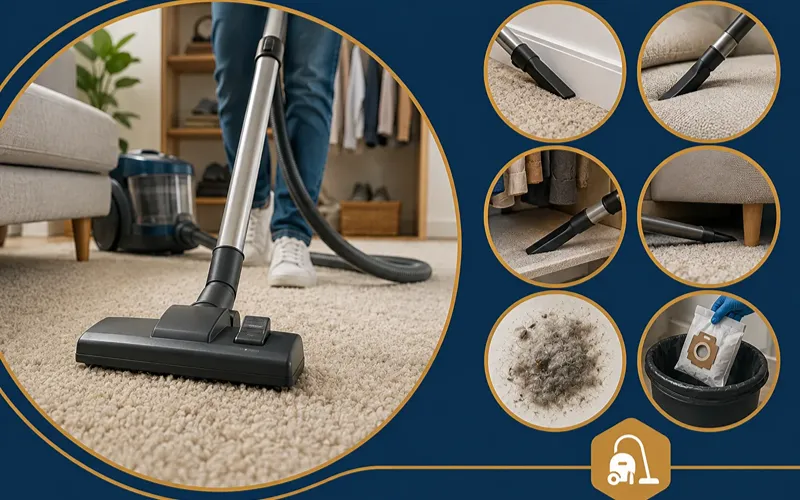
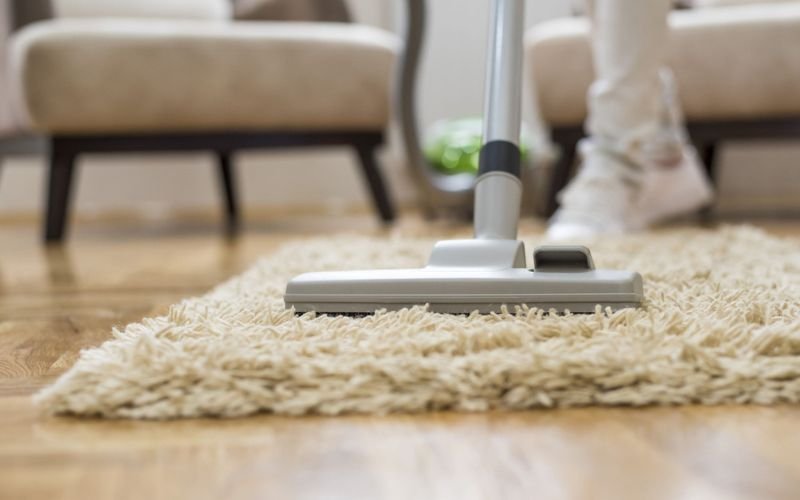
Run a vacuum with a crevice attachment over carpets, rugs, upholstery, baseboards, closet floors, and under furniture. This physically removes larvae, eggs, shed skins, and the lint and hair they feed on. Empty the canister or dispose of the vacuum bag immediately afterward so nothing survives inside it.
2. Wash, Dry Clean, or Freeze Infested Items
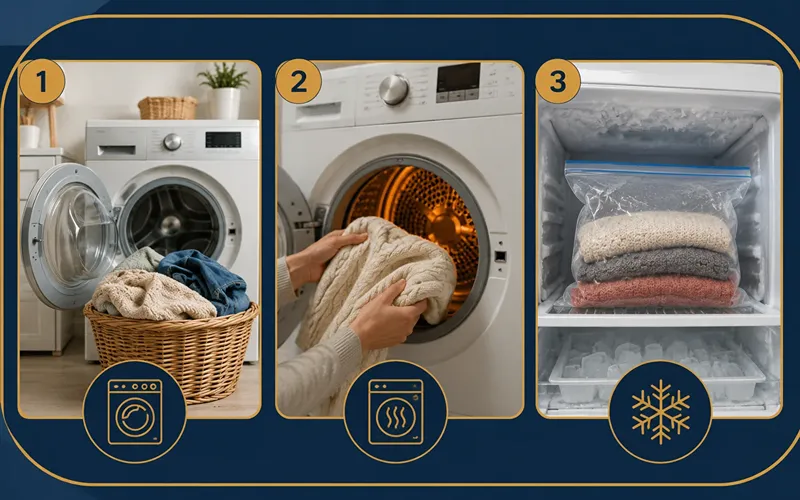
Hot water washing and drying kills carpet beetle eggs and larvae in clothing and textiles. For delicate items that can’t handle heat, seal them in a plastic bag and freeze for several days, a deep freeze at 0°F for about a week, or a colder setting for a shorter period, will eliminate the pests without damaging the fabric.
3. Steam Clean Carpets and Upholstery
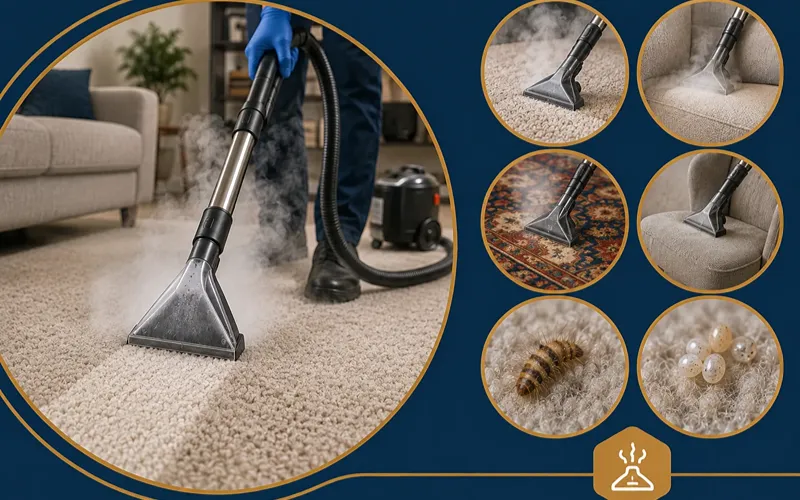
After vacuuming, a steam cleaner’s high heat penetrates deep into fibers, killing larvae and eggs that vacuuming alone might miss. This is particularly useful for wool rugs and upholstered furniture that can’t go through a washing machine.
4. Use Natural Repellents

Diluted cedar or neem essential oil sprayed on affected areas can help deter carpet beetles, though it should always be tested on a hidden patch of fabric first to rule out staining. A simple vinegar-and-water solution wiped along entry points can also make surfaces less appealing to them.
5. Seal Food and Fabric Storage

Store pantry staples like flour, grains, and pet food in airtight containers, since certain carpet beetle species will feed on them. Keep off-season clothing, blankets, and wool items in sealed bins rather than open closets.
How to Get Rid of Carpet Beetles Using Chemical Treatments
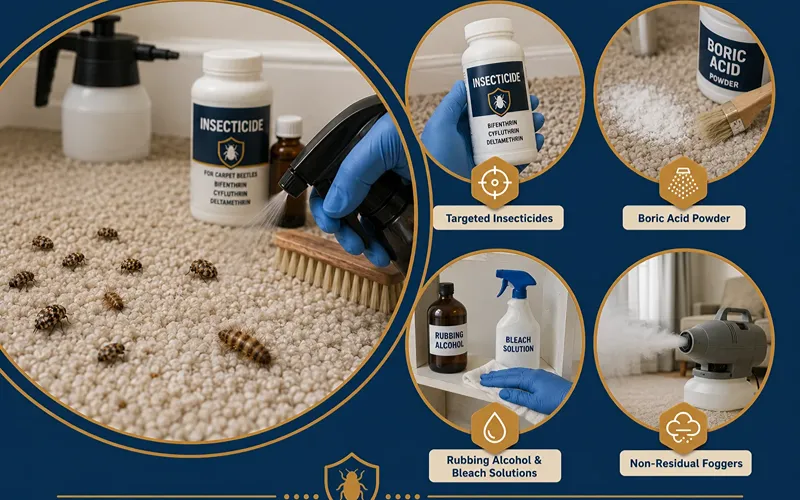
For larger or persistent infestations, chemical treatments offer a faster path to control.
- Targeted insecticides: Look for products labeled for carpet beetles containing active ingredients like bifenthrin, cyfluthrin, or deltamethrin. Always test on an inconspicuous area first to check for staining, and strictly follow label instructions.
- Boric acid powder: Apply a light, even dusting across carpets and rugs and work it in with a brush, it’s lethal to carpet beetles. Let it sit for a few hours before vacuuming it up thoroughly. Keep children and pets away from treated areas until it’s fully removed.
- Rubbing alcohol and bleach solutions: Wiping down shelves, drawers, and windowsills with rubbing alcohol discourages egg-laying, while a diluted bleach solution kills eggs and larvae on contact when used on hard surfaces.
- Non-residual foggers: These can knock down adult beetles in a room but won’t affect eggs, so they work best as one part of a broader treatment plan rather than a standalone fix.
Step-by-Step Carpet Beetle Removal Process
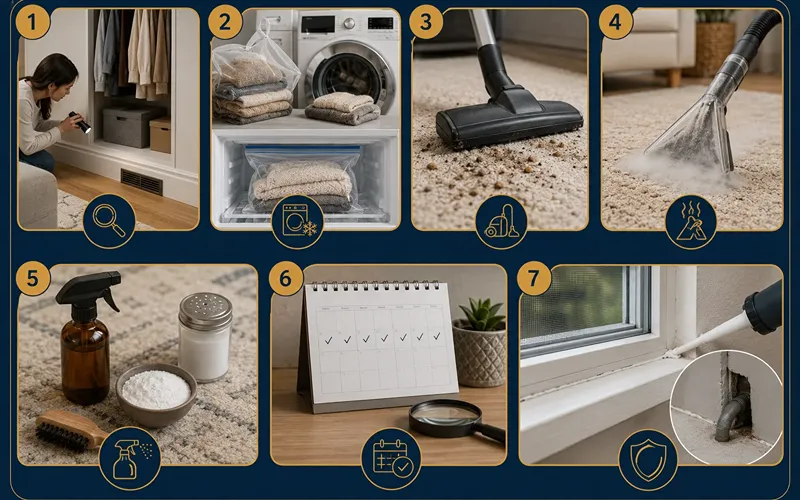
- Identify every infested area: Check closets, under furniture, air vents, baseboards, and storage boxes, not just visible carpets.
- Remove and treat fabric items: Hot-wash, dry clean, or freeze anything made from wool, fur, silk, or feathers.
- Vacuum the entire home thoroughly, focusing on crevices, corners, and under heavy furniture, then dispose of the vacuum bag or empty the canister outside.
- Steam clean carpets, rugs, and upholstery to reach larvae and eggs vacuuming alone can leave behind.
- Apply your chosen treatment: Natural repellents, boric acid, or a labeled insecticide, to affected surfaces.
- Recheck weekly for several weeks, since eggs that survived the first treatment can still hatch.
- Seal entry points such as torn screens, gaps around windows, and cracks near utility lines to stop new adults from getting in.
How to Prevent Carpet Beetles From Coming Back?
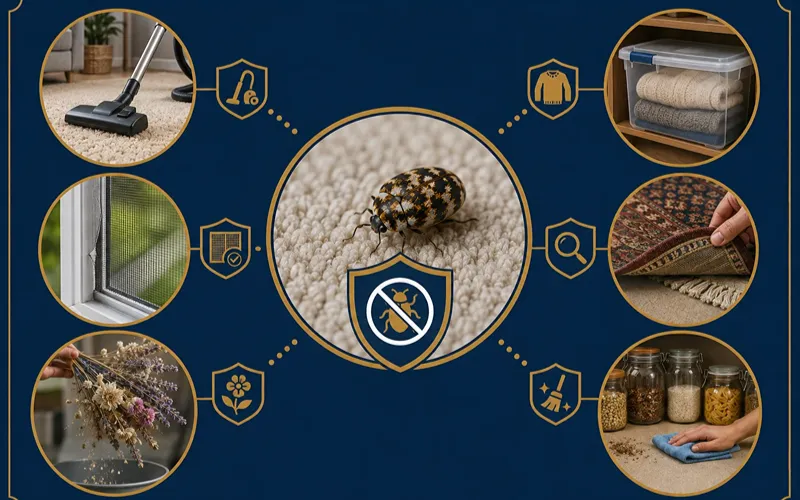
Getting rid of an active infestation is only half the job, keeping them out long-term takes a few consistent habits:
- Vacuum carpets, rugs, and upholstered furniture on a regular schedule, not just when you notice a problem
- Store wool, fur, and other natural-fiber clothing in sealed containers, especially during off-seasons
- Repair torn window and door screens and seal cracks around the home’s exterior
- Shake out cut flowers, dried arrangements, and plants brought in from outside before placing them indoors
- Inspect secondhand furniture and rugs closely before bringing them into your home
- Keep pantry items sealed and clean up crumbs, pet hair, and dust promptly, since these are common food sources for larvae
When to Call a Professional Exterminator
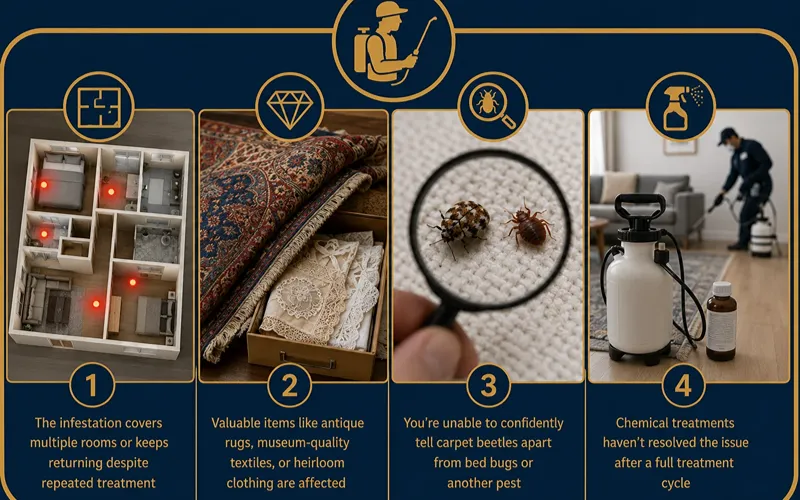
Most carpet beetle problems can be handled with diligent DIY effort, but a few situations call for professional help:
- The infestation covers multiple rooms or keeps returning despite repeated treatment
- Valuable items like antique rugs, museum-quality textiles, or heirloom clothing are affected
- You’re unable to confidently tell carpet beetles apart from bed bugs or another pest
- Chemical treatments haven’t resolved the issue after a full treatment cycle
A pest control professional can assess the full scope of the infestation and apply treatments that go beyond what’s available for home use, though even with professional help, your own cleaning routine will still play a major role in the outcome.
Final Thoughts
Carpet beetles may be tiny, but the damage they leave behind, from moth-eaten sweaters to threadbare rugs, is anything but small. The key to getting rid of them for good is combining thorough cleaning with targeted treatment and then sticking to a few simple prevention habits afterward. Catch the signs early, treat consistently, and your carpets, closets, and furniture will stay carpet-beetle-free for the long run.
Frequently Asked Questions
Do carpet beetles bite humans?
No. Carpet beetles don’t bite. However, the tiny hairs on their larvae can trigger itchy, red skin irritation in some people, which is often mistaken for bug bites.
How long does it take to get rid of carpet beetles?
Because eggs can continue hatching for weeks after treatment, full elimination typically takes several weeks of consistent vacuuming, cleaning, and monitoring rather than a single treatment session.
Can carpet beetles live in mattresses?
It’s uncommon, but possible if the mattress contains wool or other animal-based materials. They’re far more likely to be found in carpets, closets, and upholstered furniture than in bedding.
What attracts carpet beetles into a home?
Natural fibers, pet hair, stored dry food, and small gaps around doors, windows, or screens all make a home more attractive to carpet beetles looking for food or a place to lay eggs.